
Key Takeaways for Procurement Managers
Material Compliance: Generic lab reports aren’t enough. Demand batch-specific LFGB/FDA test reports and confirm secondary vulcanization parameters (200°C for 4 hours) to eliminate odor.
Mold & Shrinkage: Silicone shrinks 2%–3% during cooling. Define parting line tolerances (≤0.1 mm) to avoid liquid leaks or structural failure.
Hardness & Color: Always set a strict Shore A range (±5A) with calibrated durometer testing to ensure batch-to-batch consistency.
Packaging & Cleanliness: Silicone naturally attracts dust. Ensure dust-free workshop handling or anti-static coating before ocean shipping.
Sourcing custom silicone products from China can significantly boost your profit margins—if done correctly. However, many B2B buyers, Amazon private label sellers, and emerging brand owners learn the hard way that a clean-looking factory sample doesn’t guarantee a successful mass production run.
From hidden chemical odors causing Amazon listing suspensions to mold shrinkage that leads to leaking parts, the real risks in silicone manufacturing lie in material integrity and execution.
Before issuing your next Purchase Order (PO), use this actionable checklist to audit your Chinese silicone supplier and safeguard your brand.
1. Raw Material Compliance & Odor Verification (LFGB vs. FDA)
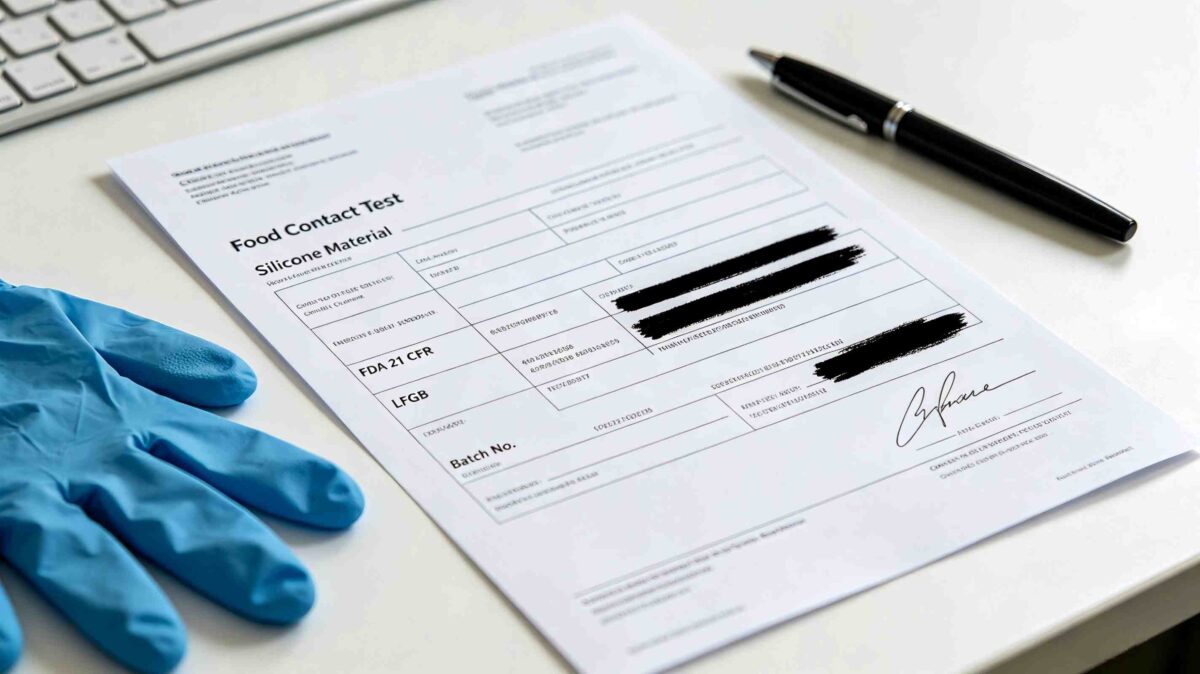
Food-grade silicone is the foundation for baby products, kitchenware, and pet supplies. However, many suppliers provide generic, years-old test certificates that do not match your actual production batch.
FDA (US Standard): Focuses primarily on lead and extraction tests. It is cost-effective but can leave higher volatile organic compounds (VOCs) if rushed.
LFGB (EU Standard): Demands far stricter testing for sensory (taste/odor) transfer and volatile matter, representing a higher grade of safety.
Real Sourcing Pitfall
A US baby product brand ordered 5,000 sets of silicone bibs. Upon arrival at the FBA warehouse, customers complained about a harsh chemical smell inside the sealed packaging. Amazon suspended the listing due to compliance flags, causing thousands of dollars in lost pre-sales revenue.
The Cause: The factory skipped secondary vulcanization (baking silicone at high temperatures to off-gas volatile compounds) to save electricity and rush shipment.
What to verify:
- Ask the factory to confirm their Secondary Vulcanization parameters (200°C for 4 hours).
- Request a batch-specific LFGB or FDA report from an accredited third-party lab (SGS, TÜV, Intertek) issued within the last 12 months.
- Perform the Pinch Test: Twist the silicone product tightly. If it turns white at the crease, cheap fillers or plasticizers were added. Pure food-grade silicone maintains its solid color.

2. Mold Tolerance & Silicone Shrinkage Control
Silicone naturally shrinks during the curing process (typically 2%–3%). Even if a hand sample or pre-production sample fits perfectly, mass-produced items will experience size deviations if the mold isn’t engineered for exact shrinkage.
Flash & Burrs: Worn or poorly aligned molds leave excess material along the parting line. On baby or pet items, sharp flash poses a choking hazard.
Dimensional Fit: Essential for collapsible silicone storage containers, lids, and multi-part assemblies.
Real Sourcing Pitfall
A kitchenware importer developed a custom silicone lid. The initial 3D sample fit the container tightly. However, during mass production, the factory used a multi-cavity mold with uneven clamping pressure, causing micro-gaps along the edge. Over 30% of the batch leaked liquids, resulting in whole shipments being rejected by distributors.
What to verify:
- Define acceptable parting line limits in your Quality Agreement (e.g., maximum flash width ≤0.1 mm).
- Require a First Article Inspection (FAI) report before mass production starts.

3. Shore Hardness & Batch Color Consistency
Silicone hardness is measured on the Shore A scale, typically ranging from 30A (ultra-soft) to 80A (rigid). A variation of just 5 degrees can completely alter the functionality of your product.
Shore A Hardness Reference for Silicone Products
- 30A – 40A:Ultra-soft, pliable — Baby teether wings, soft valves
- 50A – 60A:Flexible yet firm — Kitchen utensils, collapsible bowls
- 70A – 80A:Firm, rigid structure — Outdoor gear mounts, pet toy cores
Color shifting between production batches is another frequent complaint in wholesale silicone orders. Inconsistent color tones across SKUs will damage your brand image.
What to verify:
- Never order with a single hardness number; specify a strict tolerance range (e.g., 50A ±5A).
- Require your supplier to use a calibrated durometer for inline quality control (IPQC).
- Agree on an AQL inspection standard (e.g., Level II, Major 1.5, Minor 4.0) to set clear limits on minor cosmetic defects or color variance.
4. Sample Sign-Off: Hand Sample vs. Mass Production Sample
A common mistake among new buyers is assuming a hand-made or 3D-printed sample represents mass production quality.
Hand Samples: Crafted manually or via prototype molds, often lacking final surface treatments.
Mass Production: Manufactured using high-pressure compression or liquid silicone rubber (LSR) injection molding.
What to verify:
Always sign off on a Pre-Production Sample (PPS) pulled from the actual mass-production mold before full-scale manufacturing begins. This locks in material density, exact color tone, surface finish, and craft standards.
5. Packaging, Static Dust Control, & FBA Readiness
Silicone naturally builds static electricity, turning it into a magnet for dust, cardboard lint, and airborne particles during packing and transit.
What to verify:
- Ask if the factory applies an anti-static surface treatment or packages goods in a dust-free workshop.
- Ensure sealed polybags are used before master carton packing.
- Verify master cartons meet humidity and crush-test standards to prevent silicone deformation under long-term stacking pressure during ocean freight.
Common Mistakes New Silicone Buyers Make
 Judging quality only by touch: Recycled silicone can still feel soft, but it off-gases VOCs and wears down quickly. Appearance cannot replace lab test reports. Accepting universal factory certificates: A generic 2022 FDA report will not protect your 2026 batch from customs seizure or FBA compliance checks. Skipping pre-production sample sign-offs: Proceeding directly from 3D drawings to full production without approving a physical PPS dramatically increases defective rates.
Tailored OEM/ODM Silicone Manufacturing Solutions
Whether you are expanding an e-commerce brand or engineering custom functional gear, partnering with a manufacturer that understands material science, mold precision, and compliance is essential.
Explore our OEM/ODM custom silicone production capabilities across four specialized product categories:
Baby feeding sets, teethers, and suction bowls — Certified food-grade, BPA-free, designed for safety and durability.
Silicone lids, spatulas, and baking accessories — Heat-resistant, LFGB-compliant for modern homes.
Silicone dog chew toys, slow feeders, and grooming tools — Non-toxic, highly durable for pets.
Collapsible baskets, cups, and camping containers — Space-saving, food-safe, engineered for travel brands.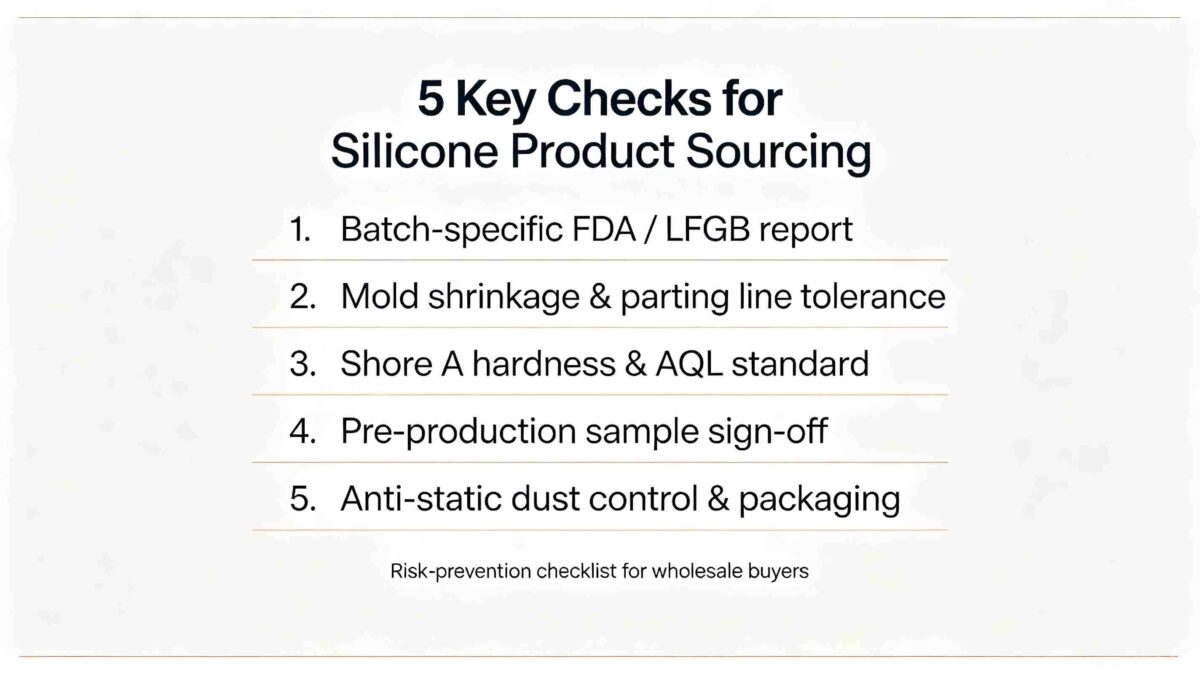
Need a Custom Silicone Audit or Quotation?
Avoid mass production delays and compliance risks from day one.
Contact our engineering team today to review your 2D/3D drawings, discuss flexible MOQs, or request a sample inspection report.